
Clearvu Window Cleaning
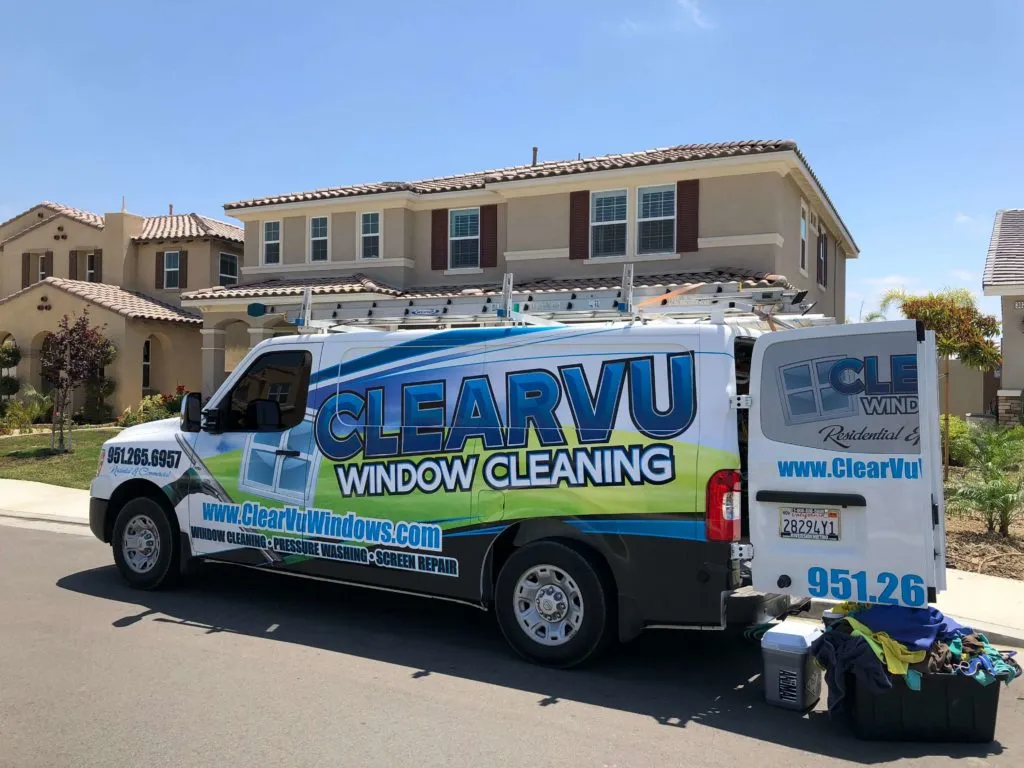
If you've ever cleaned your own windows and been disappointed with the results — streaks that only appear when the sun hits at the right angle, spots that come back within days, or a haze that no amount of wiping seems to fix — the problem probably isn't your technique. It's your tools.
Professional window cleaners don't get better results because they wipe harder or spray more product. They get better results because every tool in the process is designed specifically for glass, from the applicator to the squeegee to the water itself. Here's a breakdown of exactly what we carry on every job and why each piece matters.
The squeegee is the single most important tool in professional window cleaning. It's also the one homeowners are most likely to use incorrectly — if they use one at all.
A professional squeegee has three parts: the handle, the channel (a metal or brass bar), and the rubber blade that sits in the channel. The quality of the rubber is everything. Professional-grade squeegee rubber is softer and more flexible than what you'll find in hardware store models, which lets it maintain consistent contact with the glass surface across the entire stroke. This is what eliminates streaks.
We carry squeegees in multiple channel widths — typically 10, 14, and 18 inches. Smaller channels for divided-light windows and tight spaces, larger channels for big picture windows where you want to cover more surface area per pass. Using the wrong size for the window is a common amateur mistake that leads to overlap marks and missed edges.
The rubber itself has a limited lifespan. Once it develops nicks, flat spots, or hardened edges, it starts leaving lines on the glass. We replace or flip our rubber regularly — sometimes daily on high-volume days. This is one of those details that seems minor but makes a visible difference in the final result.
Before the squeegee touches the glass, we need to actually wash the window. This is where the applicator comes in — sometimes called a T-bar or strip washer. It's a handle with a removable fabric sleeve that holds cleaning solution and scrubs the glass.
The sleeve material matters more than most people realize. Professional sleeves are typically a blend of microfiber and synthetic scrubbing fibers — soft enough not to scratch glass, but abrasive enough to break up stuck-on debris like bug residue, tree sap, and mineral deposits. A cotton rag or paper towel can't match this combination.
We also carry heavier-duty scrubbing pads (non-scratch white pads) for windows with bonded contaminants. This is especially common on homes near freeways, construction zones, or in areas with hard water sprinkler overspray — essentially most of inland Southern California.
This might be the biggest gap between professional and DIY window cleaning. Most homeowners reach for a bottle of blue glass cleaner from the store. It's designed for mirrors, glass tabletops, and quick spot cleaning — not for washing an entire window that's been exposed to outdoor elements for months.
Professional cleaning solution is typically a concentrate mixed with water. The most common base is a few drops of professional-grade dish detergent (not the antibacterial kind — that leaves residue) mixed into a bucket of water. Some cleaners add a small amount of rubbing alcohol for faster evaporation, or a splash of ammonia for cutting through heavy grime. The ratio matters — too much soap leaves a film, too little doesn't cut through anything.
The important thing is that the solution acts as a lubricant for the squeegee. The rubber needs to glide across a wet surface to work properly. Spray-and-wipe products evaporate too quickly and leave the rubber dragging on dry glass, which is what causes streaking.
Industry Note
There's a persistent myth that newspaper is the best thing to wipe windows with. It was somewhat true decades ago when newspaper ink had different properties, but modern newspaper ink transfers to glass and leaves smudges. If anyone tells you to clean windows with newspaper in 2026, they're about 30 years behind.
Razor blades are a standard part of a professional window cleaner's kit — and they're also the tool most likely to cause damage in untrained hands.
We use razor scrapers to remove bonded contaminants that scrubbing alone can't handle: paint overspray, adhesive residue, sticker remnants, dried concrete splatter, tree sap, and stubborn mineral deposits. The blade is held at a precise low angle (around 30 degrees) against wet glass and pushed in one direction only. Done correctly, the blade glides under the contaminant without touching the glass surface beneath it.
Done incorrectly — wrong angle, dry glass, or pulling the blade backward — and you scratch the glass. This is why we strongly advise homeowners not to use razor blades on their own windows. Scratches in glass are permanent and expensive to fix (the pane usually needs to be replaced). The risk-to-reward ratio for DIY razor work is terrible.
There's one additional complication: some modern glass has manufacturer defects called fabricating debris — tiny particles embedded in the glass surface during the tempering process. A razor blade can catch on these particles and create scratches that look like the cleaner's fault but are actually a manufacturing issue. Professionals know to test a small area first and inspect the glass before committing to razor work.
Not every window can be reached from the ground, and ladders have limits — both practical and safety-related. This is where extension poles and water-fed systems come in.
Extension poles are telescoping poles (carbon fiber or aluminum) that attach to a squeegee or applicator, letting us clean second and third-story windows from the ground. Carbon fiber poles are lighter and stiffer, which matters when you're holding a 20-foot pole at full extension for hours.
Water-fed pole systems are where professional window cleaning has changed the most in the last decade. These systems use a multi-stage water purification process — typically sediment filtration, carbon filtration, reverse osmosis, and deionization — to produce water with zero dissolved solids. This purified water is pumped through the pole to a brush head at the top, where it rinses the glass.
Why does this matter? Normal tap water contains dissolved minerals (calcium, magnesium, silica). When it evaporates on glass, those minerals are left behind as spots and film. This is why even a freshly washed window can look spotted after drying — you're seeing the minerals from the water itself. Purified water with zero total dissolved solids (TDS) evaporates completely clean, leaving nothing behind.
Water-fed systems are particularly valuable in areas like the Temecula Valley, Riverside, and the Inland Empire where municipal water has high mineral content. If we used tap water on exterior windows, we'd essentially be adding new water spots while trying to clean old ones.
After the squeegee work is done, there's still detailing — the small finishing touches that separate professional results from adequate ones.
Hard water staining is the single biggest glass problem in Southern California. Sprinkler overspray, irrigation systems, and even rain runoff through mineral-heavy building materials leave calcium and silica deposits on glass that no amount of regular cleaning will remove.
Professional-grade hard water removal products are acidic compounds designed to dissolve mineral bonds without damaging glass coatings. The active ingredients are typically oxalic acid, phosphoric acid, or hydrofluoric acid (at very low concentrations for glass safety). These are NOT the same as household vinegar or CLR — those products are either too weak to dissolve heavy mineral buildup or too aggressive for certain glass types.
The key challenge with hard water removal is matching the product to the glass. Modern low-E (low emissivity) windows have metallic coatings that can be damaged by the wrong chemical. Tempered glass reacts differently than annealed glass. Tinted windows have additional considerations. Professionals know which products are safe for which glass types — and test in an inconspicuous area before treating entire windows.
If your windows have white, cloudy, or hazy deposits that don't come off with normal cleaning, that's mineral buildup and it needs professional treatment. The longer it sits, the more it bonds to the glass surface. We've restored windows that homeowners were ready to replace — but we've also seen cases where the deposits sat so long they permanently etched the glass. Early treatment makes a real difference. Learn more about our hard water removal process.
After cleaning thousands of homes, these are the most common DIY mistakes we see:
Routine maintenance on accessible, ground-floor windows? Absolutely doable yourself with the right tools and technique. But there are situations where professional equipment and experience make a genuine difference:
If any of those describe your situation, our professional window cleaning service covers everything listed above — interior and exterior glass, screen cleaning, track detailing, and hard water treatment when needed. We serve the entire Temecula Valley, Riverside, Corona, and surrounding Inland Empire communities.
Need Professional Help?
Clearvu Window Cleaning has been serving Murrieta, Temecula, and the Inland Empire since 2007.

Professional tools, professional technique, professional results. See why our customers keep coming back.